Blue light in the evening
During the day, blue light is natural — it’s in sunlight. In the evening, screens, phones and lamps keep giving it off. The eye reads that signal as “it’s still day,” just when the evening should be getting quieter.
How it works
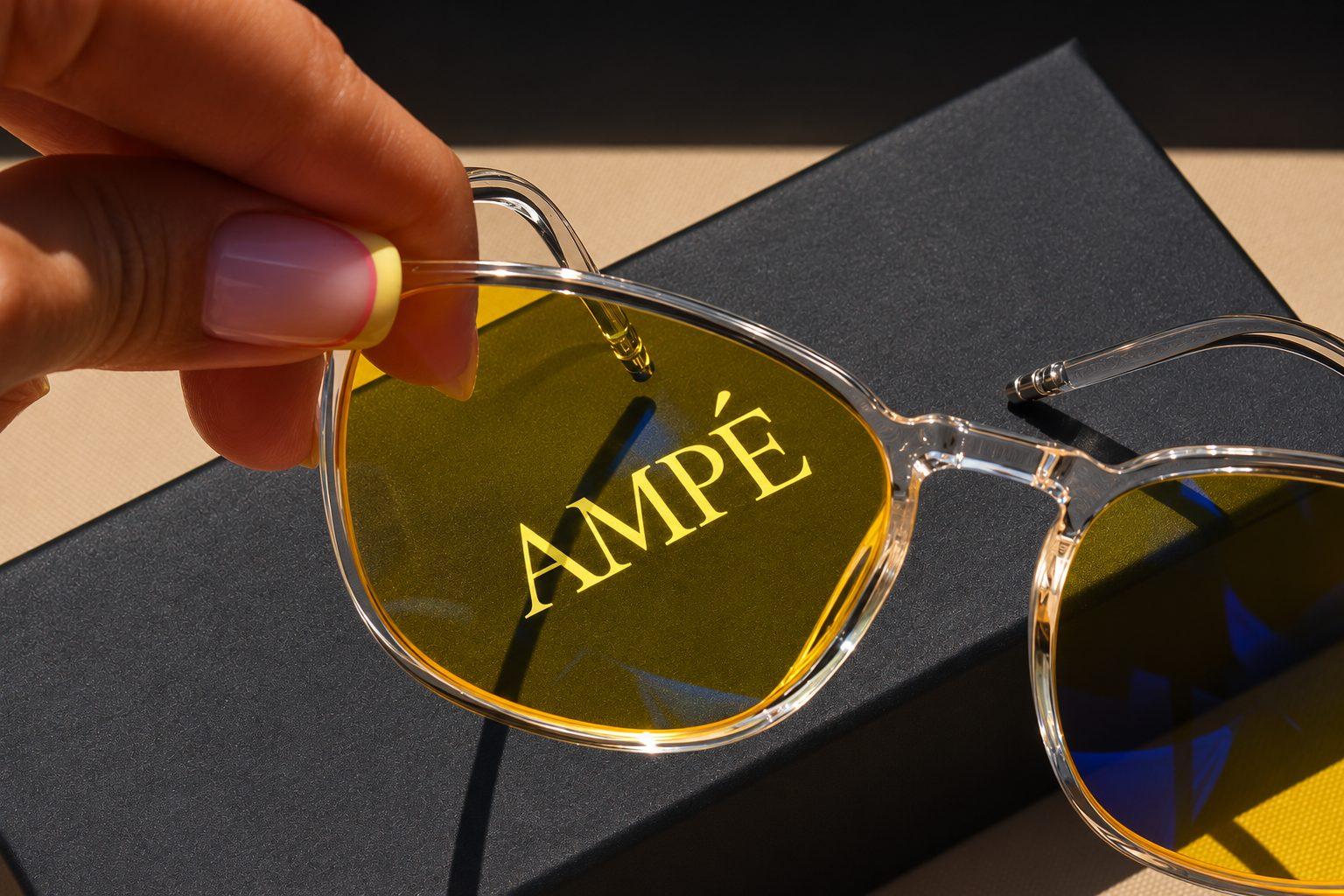
Screens and lamps in the evening give off a lot of blue light. To the body, that signal means it’s still daytime. AMPÉ Daily and AMPÉ Evening are made to filter that light: yellow plastic lenses for the day at a screen, and orange ones for the evening, before bed.
During the day, blue light is natural — it’s in sunlight. In the evening, screens, phones and lamps keep giving it off. The eye reads that signal as “it’s still day,” just when the evening should be getting quieter.
That’s why, after a long evening in front of a screen, many people still feel awake even when they’re tired. It’s not about willpower — the light is simply telling the body the wrong time.
The plastic lenses sit in front of the eye and filter some of that light before it reaches you. AMPÉ Daily is a light yellow filter for daytime screen work. AMPÉ Evening is a strong orange filter for the evening: it blocks 99.29% of blue light in the 380–500 nm range and 100% of UV (UV400).
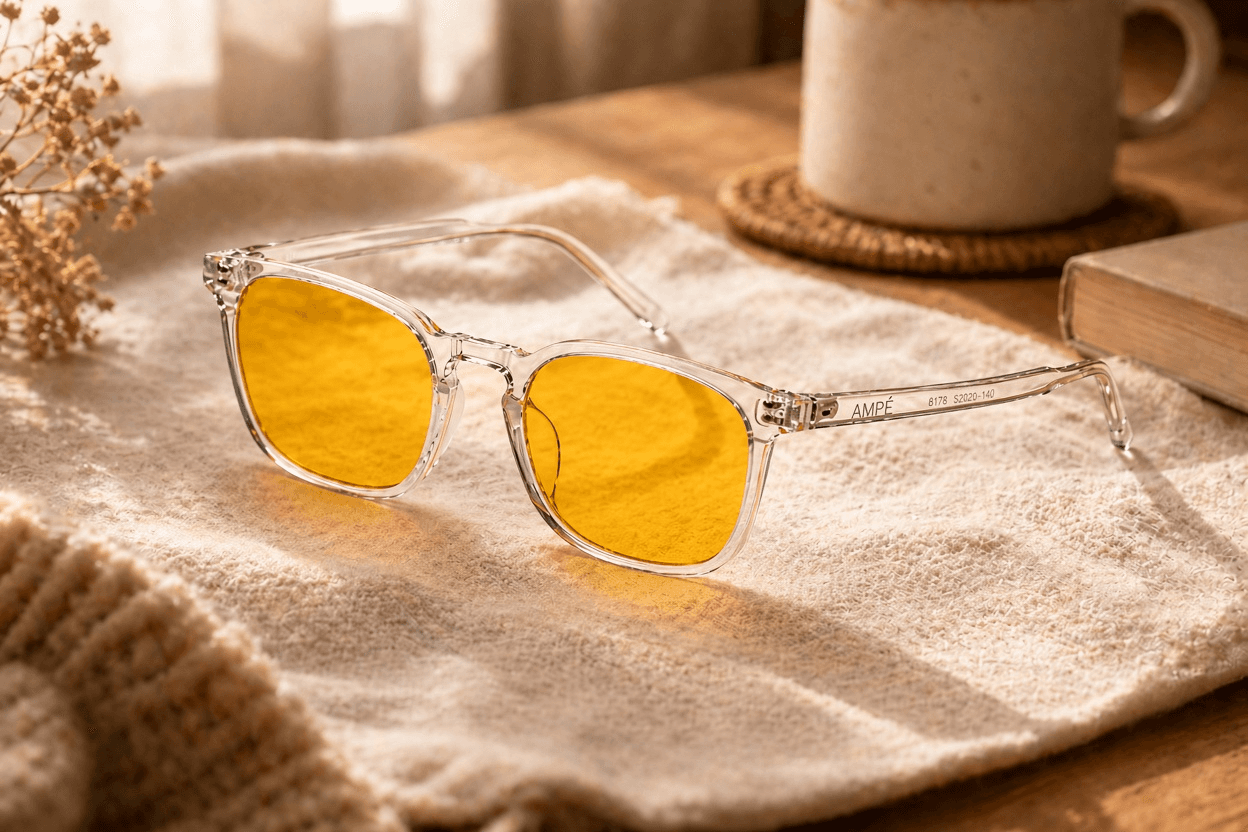
Yellow plastic lenses for everyday wear and all-day screen work. A light filter — up to 99% at 450 nm — made to be gentler on the eyes during long hours at a screen. The frame is 22 g crystal acetate, so you can wear them comfortably all day.
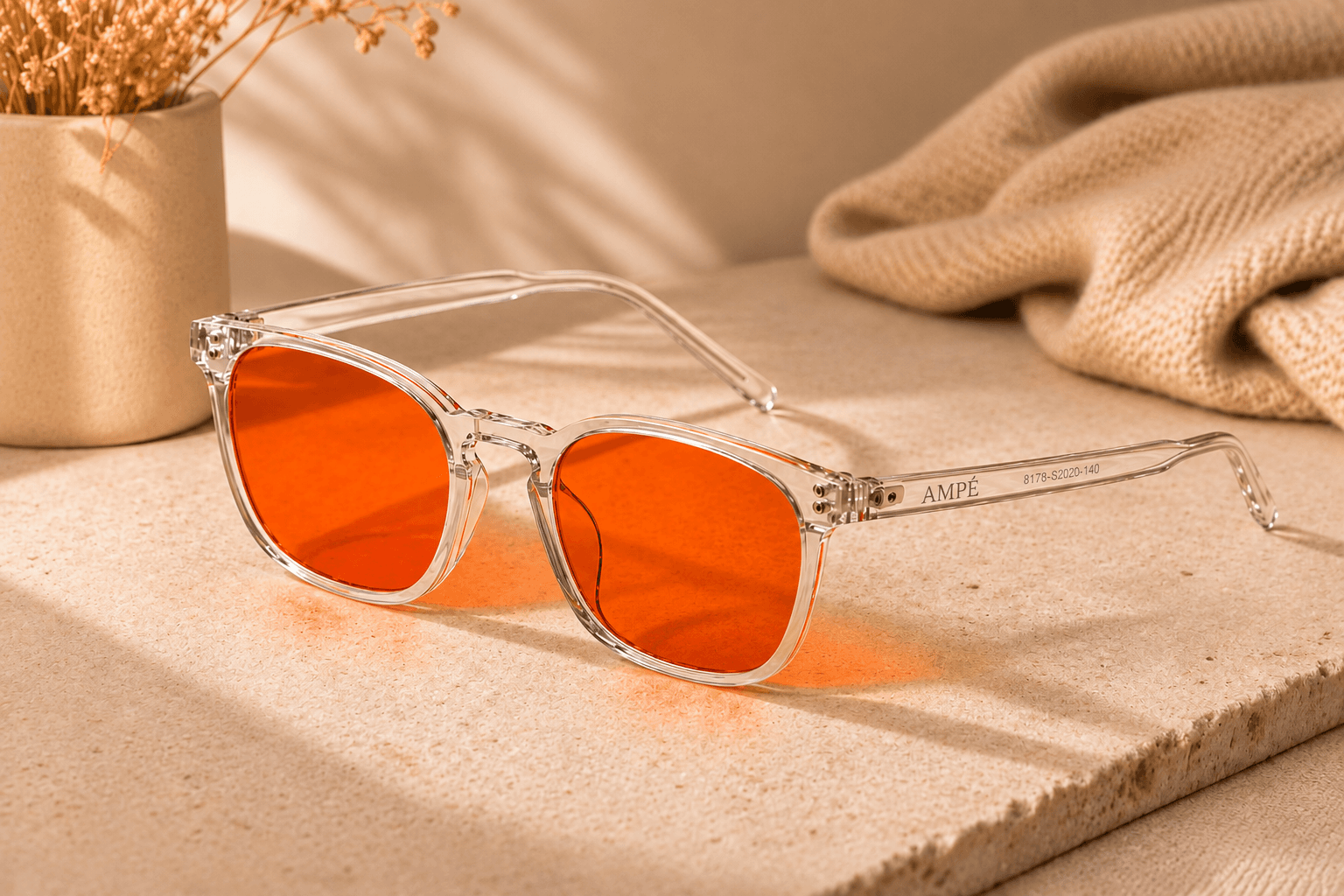
Orange plastic lenses for the evening and before bed. A strong filter: they block 99.29% of blue light at 380–500 nm and 100% of UV (UV400). Category 1, a light tint. Made to help with a calmer evening routine.

Step 1
During the day, wear AMPÉ Daily while you work at a screen. In the evening, use AMPÉ Evening about 2–3 hours before bed.

Step 2
The yellow plastic lenses are a light filter for the day at a screen. The orange ones are a strong filter for the evening and before bed.

Step 3
Wear them for several evenings in a row — that’s when it feels most natural. Many people use them as an evening routine. They may help toward a calmer evening.
The yellow and orange plastic lenses have a visible tint — most people get used to it quickly. The frame is 22 g crystal acetate, made to be worn all day.
Use AMPÉ Evening 2–3 hours before bed, and do it for several evenings in a row. Many people find the evening calmer once this becomes a routine. AMPÉ Daily is for the day — gentler on the eyes during long hours at a screen.
You have 14 days to return them, no fuss. Shipping is free on two pairs — Daily and Evening together cover the whole day. These are not a medical device; they’re made for comfort at a screen and for an evening routine.
„I work for ten hours a day in front of different screens. A few days after I started wearing AMPÉ, my headaches disappeared. Now I fall asleep as soon as I go to bed.“
If you’d like to read more about how light works in the evening.
The measurements for AMPÉ Daily and AMPÉ Evening are on the Proof page.